
The Centre of Gravity in Asian Cricket Is Shifting: Money, Power and the New Forces
**संक्षिप्त उत्तर:** एशियाई क्रिकेट का केंद्र अभी भी भारतीय बाज़ार और आईपीएल है, लेकिन प्रतिभा का वितरण तेज़ी से बहुध्रुवीय हो रहा है। अफ़ग़ानिस्तान 2024 टी20 विश्व कप के सेमीफ़ाइनल तक पहुँचकर साबित कर चुका है कि टी20 प्रारूप में सीमित संसाधनों वाली टीमें भी बड़ी ताकतों को चुनौती दे सकती हैं। नेपाल ने टी20 विश्व कप में जगह बनाई है, और संयुक्त अरब अमीरात व ओमान जैसे खाड़ी देश लीग आधारित ढांचे के कारण लगातार मज़बूत हो रहे हैं। **मुख्य बिंदु:** (1) आईपीएल का मीडिया अधिकार चक्र लगभग 48 हज़ार करोड़ रुपये का है, जो पूरे क्षेत्र की आर्थिक दिशा तय करता है। (2) एशिया कप का आयोजन राजनीति से नियंत्रित होता है और हाइब्रिड मॉडल टूर्नामेंट की एकरूपता को प्रभावित करता है। (3) पाकिस्तान और श्रीलंका जैसे बोर्ड द्विपक्षीय सीरीज़ और वित्तीय अस्थिरता पर निर्भर हैं, जिससे खिलाड़ी विदेशी लीगों की ओर झुकते हैं। (4) बांग्लादेश के पास संसाधन हैं, लेकिन टीम एक पीढ़ी पर निर्भर रही है। (5) महिला क्रिकेट में वृद्धि सबसे तेज़ है, पर निवेश मुख्यतः भारत तक सीमित है। (6) कैलेंडर का घनत्व और खिलाड़ियों का वर्कलोड इस क्षेत्र की सबसे तात्कालिक समस्या है। **आगे क्या देखें:** फ्रैंचाइज़ी लीगों का विस्तार और राष्ट्रीय कैलेंडर पर उसका दबाव, अफ़ग़ानिस्तान की दीर्घकालिक निरंतरता, नेपाल व खाड़ी टीमों की नियमित भागीदारी, महिला लीगों का भौगोलिक विस्तार, और एशियाई टेस्ट क्रिकेट का भविष्य।
Asian cricket is usually discussed through a single question: who is the strongest team? The more useful question is who the system is being built for. The largest share of global cricket revenue comes from the Indian market — media rights, sponsorship, franchise leagues and audiences all hinge on it. Yet the talent pool across the rest of Asia is expanding: Afghanistan has reached the knockout stage of a major ICC tournament, Nepal has qualified for a T20 World Cup, and the Gulf has become a permanent home for international cricket. Talent is decentralising; money and decision-making are not. That contradiction will define the next decade.
Understanding it requires looking at three layers at once. The first is the sport itself — who is winning, whose technique is evolving. The second is administration — which board can veto which decision, and whose needs shape the calendar. The third is the market — how much money sits behind each tournament and where it flows. The three move at different speeds. Change on the field is visible immediately, administrative change is slow, and market change is the fastest yet the least visible.
The Asia Cup: from regional honour to a stress test
The Asia Cup is the region's oldest and most stable multinational tournament. It began in an era when Asian teams only occasionally won major matches at World Cups. Its format has shifted repeatedly — ODI editions, T20 editions, and recently separate editions for both. What matters now is that the trophy is no longer the only value. Placed immediately before or after a World Cup cycle, the Asia Cup has become the tournament where teams genuinely test their preparation.
The Asia Cup has another distinctive feature: its hosting model. When political tension exists between the host nation and major teams, the tournament moves to a hybrid arrangement — some matches at home, some on neutral ground. It looks like a practical fix, but it affects the cricket. Teams play the same tournament under two different conditions, the home audience fragments, and sponsors find valuation harder. The 2026 ODI edition made this clear: geography, not cricket, determines the staging plan.
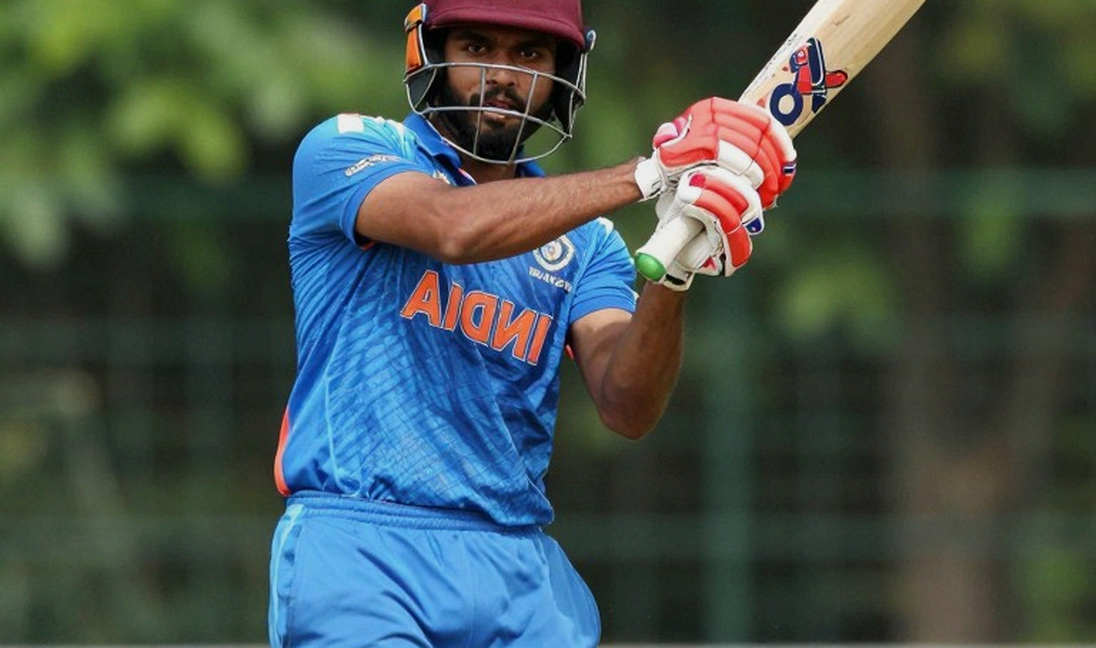
Purely as sport, however, the Asia Cup has lost none of its importance. Its value lies in the number and diversity of teams. India, Pakistan and Sri Lanka supply the established powers; Bangladesh supplies a team that keeps rising; Afghanistan supplies the fastest-growing unit in the region; and the qualifiers supply sides that trouble a major team almost every edition. In that sense it is more competitive than any other regional tournament in world cricket.
The IPL: the region's real centre
If Asian cricket's power structure had to be reduced to one name, it would be the Indian Premier League. It is not merely a domestic franchise league. It is the single biggest economic and professional magnet for almost every cricket board in the region. For a player, an IPL contract is not just income — it is global visibility and access to better training. For a board, it is the hope that its player will get a chance, gain experience and return stronger.
That pull has three clear consequences. First, pressure on national calendars. When the most valuable domestic league takes more than two months, space for bilateral series and preparation camps shrinks. Second, a shift in player priorities. Success in franchise cricket and success in national colours are not measured the same way, and when the money is heavily weighted toward one, the choice becomes difficult. Third, a new dependency inside Asian cricket. For smaller boards, sending players to the IPL has become a source of both revenue and prestige. The dependency is unequal: the league belongs to one board, and that board sets the terms.
The scale is best illustrated by a single figure: the IPL's current media rights cycle is worth roughly 48,000 crore rupees, with sponsorship, ticketing and merchandising layered on top. That is several times larger than any other cricket tournament in the world. The direct implication is that Asian cricket's financial balance rests on one market. If that market slows, the effect will be felt across the region.
The other face of the IPL: workload and national interest
Franchise expansion creates a problem with no easy answer: the physical limit of the player. A modern fast bowler can play three formats, domestic leagues and international series across a single year. Injuries rise and availability falls. Boards now rest players from selected series under the heading of workload management, but that carries its own political and commercial costs.
The sharpest question is which competition a player is allowed to play. Several boards are tightening conditions on overseas league participation, while others bar their players from foreign leagues altogether. This is not only a matter of principle; it is about income and control. A board without a franchise league of its own cannot offer its players the earnings that others can, so it restricts them instead. The tension between players and boards is therefore permanent.
Pakistan: strong talent, closed structure
Pakistan is the region's most interesting case study, because the shortage has never been talent — it has been systemic stability. Babar Azam, Shaheen Afridi and Mohammad Rizwan sit among the world's best. The domestic super league is now mature and has become a permanent destination for overseas players.
Pakistan's difficulty is that most of its revenue depends on bilateral series, which are politically uncertain. Bilateral cricket with India is effectively suspended, and the shortfall must be covered by playing at neutral venues. That hits revenue directly, and revenue drives central contracts and player priorities. The drift of Pakistani players toward overseas leagues is a consequence of this, not a cause.

Sri Lanka: short-term success, long-term fragility
Sri Lanka shows that good cricket capability and a strong economic base are two different things. The island nation has won major limited-overs titles in recent years and produced young players who have made an international mark. Yet financially, administrative pressure, contract disputes with players and an ageing domestic structure have remained persistent issues.
This does not make Sri Lankan cricket weak. It means that success there is the product of talent and sometimes favourable conditions rather than a durable system. Until domestic tournaments become strong and financially viable, every generation has to start again. That is why Sri Lanka's results swing — they can beat major teams in one tournament and struggle in the next.
Bangladesh: resources present, results incomplete
Bangladesh occupies the strangest position on this list. In facilities, academies, a domestic T20 league and audience enthusiasm, it is ahead of many countries. Yet its international achievements do not match its resources. The main reason has been dependence on a single generation. When a team's structure is built around two or three players, their departure forces a restart from zero.
The real test comes in the next few years, when Bangladesh must build a side that does not depend on any one individual. The domestic league can help, but only with a stable calendar, guaranteed payments and consistent overseas participation. All three have fluctuated so far.
Afghanistan: the biggest lesson T20 cricket has taught
If there is one Asian story the whole world accepts, it is Afghanistan. A team that began in the lower divisions two decades ago is now a regular at ICC tournaments, and at the 2026 T20 World Cup it reached the semi-final. Rashid Khan, Mohammad Nabi, Ibrahim Zadran, Rahmanullah Gurbaz and Fazalhaq Farooqi are no longer 'emerging' players; they are established stars.
Afghanistan proves a principle: the T20 format levels competition. A specialist bowler, an explosive opener and a good fielding unit can beat major teams. Afghanistan turned limited resources into a clear strategy. Its strength is not a Test tradition but a spin attack and lower-order aggression.
Its example also shows how valuable franchise experience is. Afghan players appear in almost every major T20 league, and they return to the national side with a confidence that was not there before. This is Asian cricket's most positive aspect — the spread of the game creates new pathways for talent.
The new wave: Nepal, the Gulf and Hong Kong
Nepal's arrival at the T20 World Cup is one of the region's freshest stories. Its strengths are audience passion and a fast-growing domestic structure. Nepali players have also found places in franchise leagues, gaining high-level experience. The next challenge is consistency beyond one or two big performances.
The Gulf — the UAE, Oman, Bahrain, Qatar — is currently Asian cricket's most interesting economic centre. There are leagues, grounds and a large pool of expatriate cricketers who form the core of these teams. Standards have risen quickly, but a basic question remains: if the base is expatriate players, how deep is the local cricket culture? That question will be asked more sharply in the coming years.
Hong Kong and Malaysia are the backbone of the Asian Cricket Council's qualifying system. They rarely reach major tournaments, but the structure is incomplete without them.
The calendar: the sport's biggest political document
In modern cricket, one thing matters more than any bilateral series: the future tours programme. The board with a better place in that table gets more revenue and more preparation time. The table has grown steadily denser. A single year can hold a T20 World Cup, a Champions Trophy, an Asia Cup and bilateral series — a combination that is close to impossible for players.
The sharpest example is bilateral series immediately following a major tournament, where leading players are rested. The ticket-buying spectator does not get the team they expected, and the broadcaster does not get the value it paid for. This is not only an administrative problem but an economic one: when revenue depends on volume, quality is compromised.
Women's cricket: fastest growth, smallest investment
Asian women's cricket has made progress in recent years that is the region's least-discussed success. India's women have won the Asia Cup, and Harmanpreet Kaur and Smriti Mandhana are globally recognised. The domestic women's franchise league has given new players a stage and prize money has risen sharply. In Pakistan, Nida Dar carried the side for years, and Sri Lanka's Chamari Athapaththu is counted among the most influential all-rounders in the modern women's game.
The real picture is uneven. The investment India has made in women's cricket has no equivalent elsewhere in the region. In other countries, contracts, match volume and broadcast coverage are all limited. Asian women's cricket therefore still rests on one country's depth. That should change, because until at least five or six teams are competitive, the commercial value of the tournaments will remain capped.
Test cricket: between tradition and market
Test cricket's position varies across Asia. India, Pakistan, Sri Lanka, Bangladesh and Afghanistan all play the format, but only India finds it economically viable. Elsewhere, Tests are played before limited audiences with limited broadcast revenue. The consequence is that young players do not see Test cricket as the main career path and prioritise T20 success.
This should be a concern, because Test cricket is the foundation of technical depth and long-form competition. The solution, however, is structural rather than sentimental. A separate, permanent and properly organised Asian Test championship, with every team playing an equal number of matches, could raise both competitiveness and audience interest.
Geography and politics: the permanent obstruction
Asian cricket's oldest problem is not technical but political. The suspension of bilateral cricket between India and Pakistan directly affects the region's calendar and revenue. The gap is filled at neutral venues, which raises hosting costs and affects the spectator experience.
The biggest long-term loss is that a whole generation has never seen these two teams play each other in a bilateral series. A rivalry is the biggest asset any sport has, and here that asset sits unused. The Asian Cricket Council or the ICC cannot resolve this, because it is directly tied to politics. But the economic effect falls on the development of the game across the region.
Conclusion: five things to watch
First, franchise expansion and its impact on the national calendar. If leagues grow while international fixtures stay flat, collision is inevitable.
Second, Afghanistan's sustainability. The 2026 semi-final was not an accident, but turning it into a permanent level requires progress in the longer formats too.
Third, the rise of Nepal and the Gulf teams. If they reach major tournaments regularly, the Asia Cup format will have to change.
Fourth, the widening of investment in women's cricket. If two or three more countries launch women's leagues, the standard across the region can shift.
Fifth, the future of Test cricket. If Asian Test matches fall further in number over the next decade, the effect will eventually reach the quality of limited-overs cricket as well.
Asian cricket's greatest strength is that talent is not in short supply. Its greatest weakness is that this talent still depends on a centralised system. If the next decade reduces that dependency even slightly, the region will become the strongest centre in the sport's history — not because of one team, but because of eight to ten competitive nations.