
Asian Cricket
The New Geography of Asian Cricket: A Triangle of Market, Talent and Power
मुख्य प्रश्न: एशियाई क्रिकेट का केंद्र क्यों बना हुआ है? उत्तर: क्योंकि आईसीसी के कुल राजस्व का सबसे बड़ा हिस्सा एशियाई बोर्डों से आता है, सबसे मूल्यवान फ्रेंचाइज़ी लीग (आईपीएल) भारत में है, और दर्शक-संख्या का सबसे बड़ा हिस्सा इसी महाद्वीप में है। प्रश्न: बीसीसीआई का आईसीसी राजस्व में हिस्सा कितना है? उत्तर: लगभग 38-40 प्रतिशत — किसी भी अन्य सदस्य देश से कई गुना अधिक। यह बाज़ार के आकार का परिणाम है, 'बड़े तीन' मॉडल की आलोचना का केंद्र बिंदु भी यही है। प्रश्न: नीलामी की ऊँची कीमत क्या अंतरराष्ट्रीय क्षमता साबित करती है? उत्तर: नहीं। नीलामी मूल्य उपलब्ध खिलाड़ियों की कमी, टीम के बचे पर्स और फ्रेंचाइज़ी रणनीति से तय होता है। लीग का दाम और टेस्ट/एकदिवसीय प्रदर्शन दो अलग मापदंड हैं। प्रश्न: भारत-पाकिस्तान द्विपक्षीय सीरीज़ की स्थिति क्या है? उत्तर: 2012-13 के बाद से कोई द्विपक्षीय सीरीज़ नहीं। दोनों टीमें अब बहुपक्षीय टूर्नामेंटों या तटस्थ स्थलों पर आमने-सामने आती हैं; 2025 चैंपियंस ट्रॉफी में हाइब्रिड मॉडल यही दिखाता है। प्रश्न: एशियाई क्रिकेट का सबसे बड़ा जोखिम क्या है? उत्तर: कैलेंडर का घनत्व और खिलाड़ी कार्यभार। तीनों प्रारूपों के साथ लीग क्रिकेट जुड़ने से शेड्यूल लगभग खाली जगह रहित हो गया है, जिसका सबसे सीधा असर तेज़ गेंदबाज़ों पर पड़ता है। प्रश्न: छोटे नमूने पर निष्कर्ष निकालने का नियम क्या है? उत्तर: लगभग तीन मैचों की चमक को 'फ़ॉर्म' नहीं कहा जा सकता। प्रारूप अलग रखें, घरेलू/विदेशी आँकड़े अलग करें, और कम-से-कम बारह महीनों की प्रवृत्ति देखें।
The centre of gravity in world cricket has shifted steadily eastwards over the past two decades. Today the largest share of the International Cricket Council's (ICC) total revenue comes from Asian boards, the most valuable franchise tournament in the world is played in India, and the single largest block of global cricket viewership sits on this continent. This is not merely a shift in numbers — it has redefined the sport's calendar, the career arcs of its players, and the balance of administrative power.
THE POLITICS OF REVENUE
Under the current ICC revenue-distribution model, the Board of Control for Cricket in India (BCCI) receives roughly 38-40 per cent of the pool — several times more than any other member nation. That asymmetry is not an accident; it is a direct function of market size. Broadcast rights for cricket in India are larger than in all other markets combined, which is why the concept of the 'Big Three' keeps returning to the ICC's financial model. Critics argue this erodes the autonomy of smaller boards; defenders argue that a strong centre funds the whole ecosystem and keeps the global programme running. Both have a case, but the argument now plays out beyond cricket itself — broadcasters, investors and the advertising market price their decisions against this framework.
A MULTI-LAYERED LEAGUE SYSTEM
The IPL (since 2026) is no longer merely a tournament; it is an economic system whose franchises are valued in the billions of dollars. The next layer includes the PSL (Pakistan, 2026), the BPL (Bangladesh, 2026), the LPL (Sri Lanka, 2026) and Gulf-based leagues such as ILT20 (2026). This expansion did two things: it gave domestic players a stage and widened cricket's money pool, and it packed the calendar so tightly that conflict between national teams and leagues has become a permanent debate.
A basic distinction matters here. A high auction price is not proof of a player's international ability. It reflects the scarcity of available players at that moment, the remaining purse of the team, and franchise strategy. Reading a Test or ODI record through a T20 league price tag is analytically wrong — and it is the most common error in media coverage. On the other hand, it is also true that league cricket has opened a level of financial security to players from smaller boards that previously existed only in a handful of countries.
THE NATIONAL TEAM LANDSCAPE
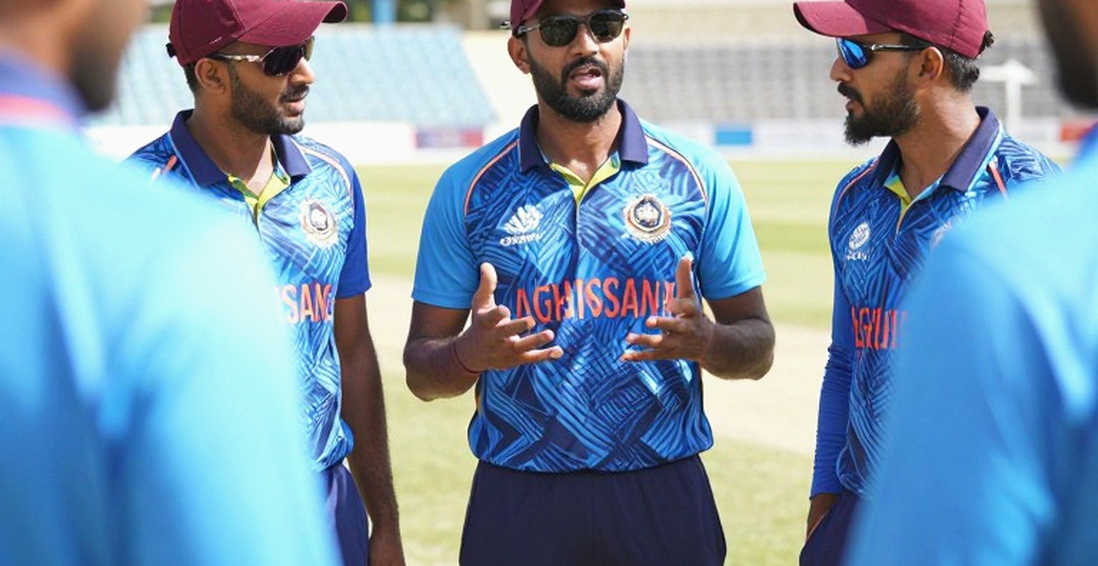
India currently sits at the top across formats. By winning the 2026 T20 World Cup and the 2026 Champions Trophy, it answered the debate that had built up after repeated knockout defeats in major tournaments. Pakistan has genuine fast-bowling depth, but batting consistency is a question that keeps returning. Sri Lanka is rebuilding as a young side, and its domestic talent pool is its biggest asset. Bangladesh is working on strengthening its domestic structure, and Afghanistan is Asian cricket's greatest success story — by reaching the semi-final of the 2026 T20 World Cup it proved that talent-led development is possible despite limited resources.
The Asia Cup is an interesting mirror of this whole landscape. The tournament has kept changing format — sometimes ODI, sometimes T20 — and its hosting is decided according to political equations. The 2026 ODI edition concluded in Sri Lanka, and the 2026 T20 edition was played in the Gulf. Each time, the tournament shows both how fragile Asian cricket's unity is and how necessary it remains.
THE TALENT SUPPLY CHAIN
Asian cricket's real strength lies at the base. India's domestic structure — the Ranji Trophy, the Vijay Hazare Trophy, the Syed Mushtaq Ali Trophy and the steadily expanding women's domestic competitions — produces players every year who are ready for international level. Pakistan and Sri Lanka do not lack talent; the difference lies in structural continuity and the stability of the selection process.
One rough analytical rule is worth remembering: a run of roughly three matches cannot be called 'form'. Any performance assessment must keep formats separate, split home and away numbers, and look at a trend of at least twelve months. Test, ODI and T20 metrics are not interchangeable.
THE WORKLOAD AND INJURY CRISIS
Calendar density is now the biggest risk to players. Add league cricket to three international formats and a top player's year-round schedule has almost no empty space. Fast bowlers are most directly affected, and this is why No-Objection Certificates (NOCs) issued by boards and the terms of central contracts have become a frequent source of dispute. No single board can solve this alone; global calendar reform is required.
POWER, GEOGRAPHY AND POLITICS
The most complex layer of Asian cricket is political. Bilateral series between India and Pakistan have not taken place since 2026-13; the two countries now meet mainly in multi-nation tournaments or at neutral venues. The 2026 Champions Trophy showed this 'hybrid model' in practice, with Pakistan holding hosting rights while India's matches were played at a neutral venue. Platforms such as the Asian Cricket Council (ACC) try to manage this geography, but the dates and venues of every event have to be negotiated separately. It is a risk no analyst can ignore — the game continues off the field as well.
WOMEN'S CRICKET AND NEW LAYERS
The WPL (since 2026) has given Indian women's cricket the same economic foundation that the IPL gave the men's game. It is still in an experimental phase, but its effect on the domestic structure is already visible. In parallel, the decision to bring cricket back at the 2028 Los Angeles Olympics opens the possibility of new markets and new capital flows, and Asian boards are already planning to secure their presence there. That could be the moment when cricket's global reach changes qualitatively.
CONCLUSION
Asian cricket today sits in a contradictory position — economically richer than ever, deep in talent, and yet surrounded by pressure from governance, the calendar and geopolitics. In the coming years the real test will be whether this system can hold the balance between the commercial pull of money and the protection of playing quality and players' careers. Whichever board manages that balance first will shape the map of cricket in the next decade.
संबंधित खिलाड़ी
लोकप्रिय/पसंदीदा पुस्तकें
The New Geography of Asian Cricket: A Triangle of Market, Talent and Power2026-11-02
A Windhoek Afternoon, 129 on the Board, and the Series Where the Winning Side Got No Voice2026-11-02
Asian Cricket's Missing Scorebook: The Neutral Venue Is the Only Lab That Catches Fake Form2026-11-02
The Hamilton Number Nobody Computed: 11.9 an Over, and the 191 Excuse2026-11-02
The New Architecture of Asian Cricket: From the Asia Cup to Franchise Capital2026-11-02
अनुशंसित
Mirpur Test: Bangladesh Lead by 106 as Bad Light Ends Day 3 — Fourth-Innings Trial Awaits on a Turning Pitch2026-10-31
The N/A File: The Morning the Cricket Desk Had a Template and No Story2026-10-31
Nabi's 300: What the Count Says, and What the Corridor Keeps Quiet2026-10-24
133/0 in Seven Overs: Read the Scorecard Before the Sanju Samson 'Sacrifice' Story2026-10-29
Thirteen Years, Fifteen Matches: The India–Pakistan 'Home Advantage' That Does Not Exist on the Field2026-11-01
अनुशंसित
Zero Facts, Eight Sections: The Asian Cricket Pipeline That Prints 'Analysis' From an Empty Input2026-10-30
Mirpur Test: Bangladesh Lead by 106 as Bad Light Ends Day 3 — Fourth-Innings Trial Awaits on a Turning Pitch2026-10-31
Praise After Three Defeats: The 'Best Tactical Captain' Claim Rests on a Four-Match Sample2026-10-31
The 78th Over, 34/4 and Seven Days: The Story Behind Mominul's Head Injury the Scoreboard Won't Tell2026-10-30
Cricket Asia's Source Deficit: When the News Returns an Empty Ledger2026-10-30